
Creating a private, secure, and beautiful backyard doesn’t have to drain your bank account. Many homeowners assume that a sturdy fence requires a massive investment, but that is simply not true. You can achieve privacy and style with the right materials and a little creativity.
If you are looking for inexpensive wood fence ideas, you have come to the right place. Wood remains one of the most versatile and accessible materials for fencing. It offers warmth and natural beauty and can be customized to fit any landscape design.
This guide explores ten affordable fencing options that look great and perform well. We will cover everything from rustic styles to modern designs, ensuring you find a solution that fits your specific needs.
Why Wood Is a Smart Choice for Budget Fencing
Wood is often the go-to material for homeowners who need a cost-effective option for their property lines. Unlike vinyl or wrought iron, which often come with high upfront costs, wood allows for flexibility in both design and price point.
Fences offer security, boundary definition, and privacy. Wood manages to provide all three while remaining relatively easy to work with for DIY enthusiasts. You can cut costs significantly by handling the installation yourself or by choosing lumber types that are readily available in your area.
Pressure-treated pine is usually the most affordable lumber option. It resists rot and insects effectively. While cedar and redwood are beautiful, they are more expensive. Stick to treated pine or spruce if your primary goal is saving money.
10 Inexpensive Wood Fence Ideas
Here are ten creative ways to fence your yard without overspending. These fence ideas prove that you do not need to sacrifice aesthetics for affordability.
1. The Classic Dog-Ear Fence
The dog-ear fence is a staple in suburban neighborhoods for a reason. It is effective, simple to build, and affordable. The name comes from the shape of the pickets, which have the corners cut off at the top.
This style is budget-friendly because the pickets are mass-produced and widely available at any home improvement store. You do not need complex hardware or custom cuts. You can often buy pre-assembled panels to save time or build it picket-by-picket to save money on labor. It provides excellent privacy since the boards are placed right next to each other.
2. DIY Pallet Fences
If you have more time than money, pallet fences are the ultimate low-cost solution. Shipping pallets are incredibly durable because they are built to hold heavy loads. Many businesses give them away for free just to get rid of them.
To build this, you can use the pallets whole for a rustic, chunky look. Alternatively, you can break them down to harvest the slat wood for a more refined appearance. While the labor involved in dismantling pallets is high, the material cost is near zero. Sanding and staining the wood can transform rough industrial scraps into a charming cottage-style barrier.
3. Split Rail Fence with Mesh
A split rail fence offers a timeless, rustic look that fits perfectly in rural or semi-rural settings. This style uses timber logs split lengthwise to form rails. The rails slide into holes in the posts, meaning you often don’t even need nails or screws.
Because this design is open, it uses far less wood than a solid privacy fence. This drastically lowers your material bill. If you need to keep a dog inside or keep critters out, you can attach wire mesh to the back of the rails. This combination provides the containment you need without the expense of a solid wood wall.
4. Traditional Picket Fences
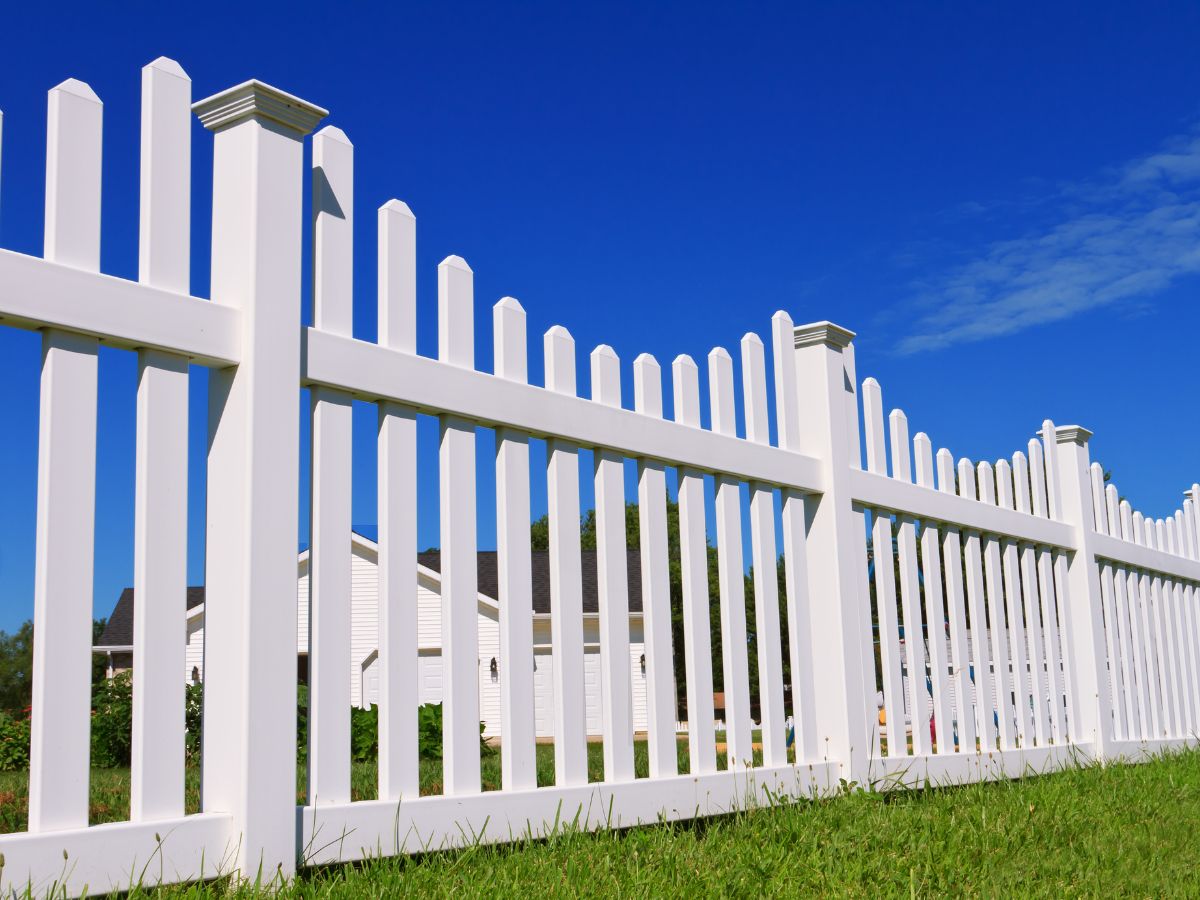
Picket fences are iconic. They scream “American Dream” and add instant curb appeal to front yards. The beauty of a picket fence lies in the spacing. Because there are gaps between the slats, you use significantly less wood than you would for a privacy fence.
You can buy individual pickets for a very low cost. Shorter fences, around three or four feet tall, are even cheaper. This style defines your property line clearly without blocking views or light. It is a perfect middle ground between an open boundary and a solid wall.
5. Hog Wire and Wood Frame
For a modern, airy look, consider combining a wood frame with hog wire. Hog wire consists of heavy-gauge metal grids originally designed for agricultural pens. It is rigid, durable, and much cheaper than specialized architectural fencing panels.
You build a simple frame using pressure-treated 2x4s and sandwich the hog wire panel inside. This creates a sleek, industrial-modern aesthetic that allows breezes to pass through. It preserves your view while keeping pets and children safe. The reduction in wood usage makes this a very smart financial move.
6. Horizontal Board Fence
Horizontal fences are trendy right now. They make small yards look bigger and feel more contemporary. While some high-end horizontal fences are pricey, you can modify the design to be budget-friendly.
Instead of using expensive cedar planks, use standard pressure-treated deck boards or fence pickets turned sideways. Leave a small gap between the boards to save on materials and allow for wind flow. This spacing reduces the total amount of lumber you need to buy. The look is high-end, but the materials are standard and affordable.
7. Wattle Fencing
Wattle fencing is an ancient technique that costs almost nothing if you have access to the right natural materials. It involves weaving thin branches or saplings between upright wooden stakes.
Willow, hazel, or any flexible green wood works best for this. If you have a wooded property or neighbors clearing brush, you might get the materials for free. Wattle fences have a distinct, storybook charm that works beautifully in gardens. They are not as secure as a 6-foot privacy fence, but they are fantastic for garden borders or decorative divisions.
8. Shadow Box Fence
A shadow box fence looks good from both sides. Pickets are attached alternately on the front and back of the rails. This design allows air to flow through, which puts less stress on the fence during high winds.
While it uses slightly more wood than a standard dog-ear fence, it is still an affordable option compared to masonry or vinyl. It is often called a “good neighbor” fence because both you and your neighbor gets the finished side. The gaps provide semi-privacy. When you look at it from an angle, it looks solid; when you look straight on, you can see through slightly.
9. Privacy Screen Panels
Sometimes you don’t need to fence the entire perimeter. If your goal is to block a specific view or create a secluded patio area, building standalone privacy screens is a great strategy.
You can build three or four decorative panels using lattice or horizontal slats. Place them strategically where you need privacy the most. By not fencing the entire yard, you save a fortune on fence costs. This approach focuses your budget exactly where it matters, allowing you to use higher-quality materials for those few specific sections.
10. Lattice Top Fence
Solid privacy fences can sometimes feel like fortress walls. Adding a lattice top breaks up the visual monotony and adds a decorative touch. You can use standard pine boards for the bottom solid portion and top it with a foot of pre-made lattice.
Lattice sheets are relatively inexpensive. This design allows you to use cheaper, lower-grade wood for the bottom section since the eye will be drawn to the decorative top. It allows light to filter through, making your yard feel open yet private.
Understanding Fence Costs and Planning
Before you start digging post holes, you need to understand how fence costs are calculated. The primary metric is the cost per linear foot. This includes the posts, rails, pickets, concrete for setting posts, and fasteners.
To calculate this, measure the total length of the area you want to fence. Divide that by the spacing of your posts (usually 6 or 8 feet) to determine how many posts you need. Then, calculate the number of rails and pickets based on your chosen style.
Remember that height impacts price heavily. A 6-foot fence requires longer posts and more picket material than a 4-foot fence. If total privacy isn’t mandatory, building a shorter fence is an easy way to cut costs instantly.
Tips to Keep Your Project Budget Friendly
Building a fence involves more than just buying wood. Here are practical tips to ensure your project stays within budget.
- Do It Yourself: Labor is often 50% of the total cost of a fence installation. If you are physically able, digging the holes and screwing in the boards yourself will save you hundreds, if not thousands, of dollars.
- Space Your Posts Wisely: Standard spacing is 8 feet. If you place posts every 6 feet, you increase stability but also increase the number of posts and bags of concrete you need to buy. Stick to 8-foot spacing unless you live in a very high-wind area.
- Use Pressure-Treated Pine: This is the workhorse of the fencing world. It is significantly cheaper than cedar or redwood. With proper stain and sealant, it can look just as good and last for decades.
- Mix Materials: You don’t have to use wood for everything. As mentioned with the hog wire or mesh ideas, using metal grids for the infill can be cheaper than solid wood, especially if lumber prices are high in your area.
- Keep the Design Simple: Every cut requires time and labor. Every decorative post cap adds to the bill. A flat-top fence is cheaper than one with a scalloped or arched top. Simple designs are faster to build and easier to repair.
Maintenance for Longevity
The key to making inexpensive wood fence ideas last is maintenance. A cheap fence that rots in three years is not actually cheap. You end up paying for it twice.
You must seal or stain your wood fence. Moisture is the enemy of wood. A good water-repellent sealant prevents rain from soaking into the fibers, which causes warping, cracking, and rot. You should apply a sealant a few months after installation, once the wood has dried out, and then reapply it every two to three years.
Keep vegetation away from the fence. Vines and bushes trap moisture against the wood and can attract insects. Ensure your sprinkler heads are not blasting the fence directly every morning.
Inspect your fence annually. If you see a loose board, screw it back in immediately. If a post starts to wobble, reinforce it. Small repairs are cheap; replacing a whole section is not.
Quick Answer: What Is the Cheapest Wood Fence to Build?
The cheapest wood fence to build is typically a pallet fence. Because pallets can often be sourced for free from local businesses or warehouses, your only high costs are fasteners and posts. If you prefer buying new lumber, a split rail fence is the most affordable traditional option because it requires fewer materials per linear foot than privacy fences.
Final Thoughts on Affordable Fencing
Your yard deserves to be a sanctuary. Whether you choose the rustic charm of split rail fence designs, the “free” appeal of pallet fences, or the classic look of picket fences, there is a solution that fits your budget.
The goal is to strike a balance between function and cost. Identify exactly why you need the fence. Is it for the dog? For privacy from the neighbors? For decoration? Once you know the purpose, you can choose the most economical design that meets that requirement.
By selecting the right materials, considering a DIY approach, and committing to regular maintenance, you can build a stunning wood fence that enhances your property value without overspending.
If you are ready to secure your property but need professional guidance on installation or materials, Perimtectx can help you explore options that balance quality and budget perfectly.